86-0573-88960598 / Sales & Service Support
Email:fuluo@jxfuluo.com
Medical converting is the industrial process of transforming raw substrate materials — woven fabrics, non-woven sheets, polyurethane films, foams, and specialty papers — into finished or semi-finished medical products through cutting, coating, laminating, slitting, and packaging. The term covers a broad spectrum, from simple adhesive-coated fabric bandages to sophisticated multi-layer wound dressings with bioactive components.
Unlike commodity converting, medical converting operates under stringent regulatory frameworks. Products intended for wound care, fixation, and physiotherapy must satisfy international standards such as ISO 13485 (Quality Management for Medical Devices), CE marking requirements for the European market, and FDA registration for U.S. distribution. Achieving and maintaining these certifications demands investment in cleanroom environments, validated coating lines, and end-to-end traceability systems.
Founded in 2007, Jiaxing Fuluo Medical Supplies Co., Ltd (FULUO) is headquartered in Zhejiang Province, China — one of the world's most concentrated manufacturing corridors for medical textiles. Operating a 20,000 m² factory with 160 employees and an annual adhesive coating capacity of 4 million square metres, FULUO represents the integrated, export-oriented model that now defines global medical converting.
Every finished medical tape or dressing begins life as a jumbo roll. Understanding the substrate hierarchy helps buyers specify the right base material for their clinical or sports application. FULUO's medical roll material range covers six primary substrate families:
| Substrate | Base Material | Elasticity | Moisture Handling | Primary Use | FULUO Product |
|---|---|---|---|---|---|
| Kinesiology Tape Jumbo Roll | Cotton / Nylon / Rayon knit | High (≈140–160% elongation) | Breathable; moisture-wicking | Sports rehab, lymphatic support | View Roll |
| Rigid Sports Tape Jumbo Roll | Cotton cloth with zinc oxide adhesive | Non-elastic (rigid) | Absorbs perspiration | Joint immobilisation, strapping | View Roll |
| Elastic Adhesive Fabric Roll | Woven/knit elastic fabric | Medium–High | Good breathability | Compression, wound fixation | View Roll |
| PU Film Adhesive Roll | Polyurethane film | Very high (film-conforming) | Semi-permeable (MVTR-rated) | IV fixation, transparent dressings | View Roll |
| PE Foam Electrode Roll | Polyethylene foam | Low–Medium | Occlusive; absorbs exudate | TENS electrodes, foam dressings | View Roll |
| Non-woven Adhesive Roll | Spunlace / spunbond non-woven | Low | High breathability | Surgical tape, general fixation | View Roll |
The adhesive layer is as critical as the substrate. FULUO sources Japanese acrylic pressure-sensitive adhesive (PSA) for its kinesiology tape lines — a deliberate choice that keeps skin sensitisation rates low while delivering residue-free removal. Acrylic PSA offers superior UV and humidity resistance compared to rubber-based alternatives, making it the adhesive of choice for products requiring multi-day wear in athletic or clinical environments.
Zinc oxide adhesive, used in rigid sports tape, provides a high initial tack suited to strapping joints before intense activity. Its antimicrobial properties add a clinical benefit, particularly for skin prone to fungal irritation in humid conditions.
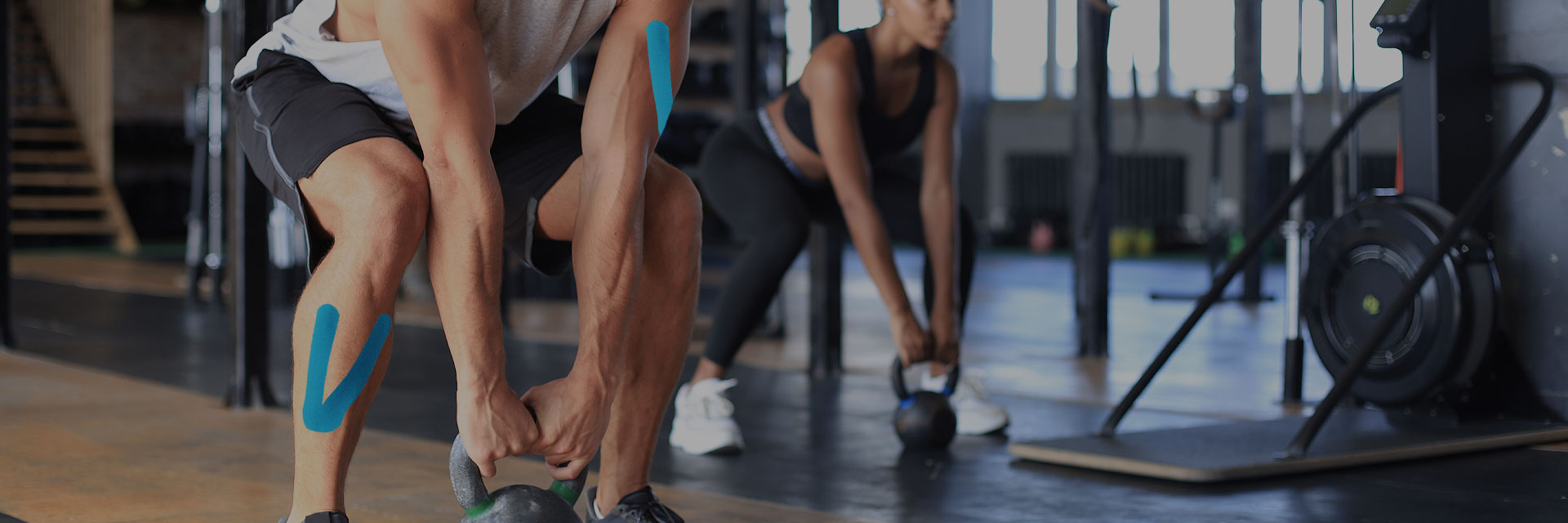
Kinesiology tape (also called KT tape or K-tape) was pioneered in Japan during the 1970s and gained global visibility during the 2008 Beijing Olympic Games. Its fundamental design principle is to replicate the mechanical properties of human skin — specifically its weight, thickness, and stretch ratio — so that when applied, the tape moves with the body rather than against it.
"Kinesiology tape is an ultra-thin, breathable tape with elasticity that comes in different widths, colours and can be cut into different shapes as needed to be applied to the skin, muscles and joints that need treatment. It greatly reduces skin irritation compared to traditional poultices and allows the treated area to move naturally."— FULUO Medical — Kinesiology Tape Product Page
A standard kinesiology tape is a three-layer composite: a textile backing (cotton, nylon, or rayon), a pressure-sensitive acrylic adhesive, and a release liner printed with a wave pattern that pre-activates the adhesive before application. The wave pattern on the liner is not decorative — it induces a slight convolution in the adhesive surface that mirrors the tape's fingerprint-wave texture on skin, a key mechanism in the proposed "skin-lifting" effect.
| Product | Backing Material | Waterproof | Elongation | Key Differentiator | Link |
|---|---|---|---|---|---|
| Uncut Kinesiology Tape | Cotton knit | Standard | ~150% | Full rolls for custom cutting by practitioners | View |
| Waterproof Kinesiology Tape | Nylon knit | Yes (IP-rated) | ~155% | Ideal for swimmers & aquatic therapy | View |
| Ventilate Kinesiology Tape | Perforated cotton | Standard | ~140% | Micro-perforations for maximum airflow | View |
| Nylon Kinesiology Tape | Nylon knit | Semi | ~160% | Greater durability and dye saturation | View |
| Rayon Kinesiology Tape | Rayon / Viscose | Standard | ~145% | Soft hand-feel; premium skin contact | View |
| Pre-Cut Kinesiology Tape | Cotton / Nylon | Optional | ~150% | Ready-to-apply strips; retail-friendly packaging | View |
| Custom Kinesiology Tape | Customer-specified | Optional | Variable | Full OEM: logo, colour, size, packaging | View |
Current clinical literature proposes several overlapping mechanisms: the tape's elastic recoil creates a gentle lifting force on the dermis, theoretically decompressing pain receptors and improving local circulation of oxygenated blood and lymphatic fluid. Motor-point and muscle-belly application techniques are used to either facilitate or inhibit muscle activation. Proprioceptive stimulation — the tape's constant tactile feedback to mechanoreceptors — may also improve joint position sense and movement patterns, a benefit particularly studied in anterior cruciate ligament rehabilitation protocols.
Medical plaster tape covers a wide family of adhesive tapes used primarily for wound dressing fixation, cannula securement, and general patient care. The principal distinction from kinesiology tape is the backing material and clinical intent: plaster tapes prioritise gentle adhesion to skin without requiring elasticity.
| Tape Type | Backing | Adhesive | Porosity | Best For |
|---|---|---|---|---|
| Silk (Satin-weave) Tape | Polyester / rayon satin | Acrylic PSA | Low–Medium | Fragile skin, paediatrics, elderly patients |
| Microporous Paper Tape | Crepe paper | Acrylic PSA | High | General fixation, post-operative dressing |
| PE Film Tape | Polyethylene film | Acrylic PSA | Minimal | Waterproof fixation, stoma care |
| Non-woven Tape | Spunlace non-woven | Acrylic PSA | High | Everyday wound care, IV line fixation |
| Foam Medical Tape | PE foam | Acrylic PSA | Occlusive | Electrode attachment, pressure-relieving dressings |
| Cloth / Zinc Oxide Tape | Cotton woven | Zinc oxide | Medium | Strapping, immobilisation, blister prevention |
FULUO manufactures the full spectrum above, and each variant is available as a customised OEM product with brand-specific core sizes, packaging, and regulatory documentation support.

Modern wound dressings have moved far beyond passive gauze pads. Advanced dressings create and maintain a moist wound environment — proven since the seminal research of George Winter in 1962 to accelerate re-epithelialisation and reduce scarring. Today's product portfolio spans several distinct technology platforms:
Thin, transparent polyurethane films coated with a hypoallergenic acrylic adhesive. Their moisture vapour transmission rate (MVTR) allows water vapour to escape while preventing bacterial ingress. They are transparent, enabling continuous wound monitoring without removal — a significant clinical advantage in surgical and IV-site management.
Polyurethane or silicone foam layers absorb moderate-to-heavy exudate while maintaining a moist environment at the wound interface. Available in foam wound dressing formats with or without adhesive borders, they are the dressing of choice for chronic wounds such as pressure ulcers and venous leg ulcers.
These contain a gel-forming agent (typically carboxymethylcellulose) embedded in an adhesive matrix. On contact with wound exudate the matrix forms a cohesive gel that debrides necrotic tissue through autolysis. Hydrocolloids are self-adhesive and waterproof, permitting patients to shower — a meaningful quality-of-life improvement in outpatient settings.
Non-woven wound dressings offer high absorbency combined with excellent conformability on awkward body contours. Spunlace constructions provide a soft wound contact surface with low adherence, reducing pain during dressing changes.
| Dressing Type | Exudate Level | Wound Type | Wear Time | Key Property |
|---|---|---|---|---|
| PU Film Dressing | Low / nil | Superficial, IV sites | Up to 7 days | Transparency, MVTR control |
| Foam Dressing | Moderate–High | Pressure ulcers, chronic wounds | 2–5 days | High absorbency, thermal insulation |
| Hydrocolloid Dressing | Low–Moderate | Partial-thickness, abrasions | 3–7 days | Autolytic debridement, waterproof |
| Alginate Dressing | High | Cavity wounds, burns | 1–3 days | Haemostatic, gel-forming fibres |
| Non-woven Dressing | Low–Moderate | Post-surgical, general wounds | 1–2 days | Soft contact, easy removal |
| Silicone Gel Dressing | Low–Moderate | Sensitive skin, scar management | Up to 7 days | Atraumatic removal, scar softening |
FULUO segments its application knowledge into four domains, each supported by dedicated technical resources at jxfuluo.com/applications:
From elite athletes to weekend warriors, sports applications demand tapes that survive sweat, movement, and water. Kinesiology tape applied using muscle facilitation or inhibition techniques can address disorders caused by muscle imbalance — including muscle pain, spasm, joint pain, and reduced strength. Rigid zinc oxide strapping provides structural support for acute ankle sprains during return-to-play protocols. Pre-wrap foam underwrap protects skin under rigid tape applications.
Peri-operative wound care demands sterile, highly conformable fixation materials. PU film dressings secure central venous catheters; non-woven tapes fix post-surgical dressings over skin that may be compromised by anaesthetic agents, antiseptic preparation, or incision stress. Silicone-border foam dressings are increasingly specified in enhanced recovery after surgery (ERAS) protocols for their ability to manage wound exudate while minimising dressing-change frequency.
This segment covers everyday wound care at home, ranging from adhesive island dressings for minor lacerations to specialised eye patches for post-operative ophthalmic care. Consumers value product features like easy single-handed application, hypoallergenic adhesives, and waterproof designs that do not interrupt bathing.
Hospital-grade applications encompass intravenous cannula fixation, TENS electrode attachment, negative-pressure wound therapy (NPWT) film draping, and ostomy care. These uses set the most demanding performance requirements: adhesion must be maintained over multi-day periods on skin potentially compromised by oedema, diaphoresis, or topical preparations.
One of the most commercially significant capabilities in medical converting is OEM (Original Equipment Manufacturer) service — the ability to manufacture a finished product to a brand owner's specifications rather than a generic catalogue item. FULUO's customisation service extends across the full value chain:
From substrate selection through coating formulation, die-cutting geometry, packaging artwork, and regulatory documentation, FULUO's engineering team has developed more than 100 distinct tape SKUs as finished or semi-finished products. The company maintains its own fabric-weaving operations, enabling tight control over base-material consistency — a competitive advantage that eliminates a common source of batch-to-batch variation in outsourced converting.
| Customisation Parameter | Options Available |
|---|---|
| Backing substrate | Cotton, nylon, rayon, PU film, PE foam, non-woven, polyester |
| Adhesive type | Japanese acrylic PSA, zinc oxide, silicone, rubber-based |
| Width & length | 5 mm – 200 mm width; roll length per specification |
| Colour & printing | Pantone-matched solid colours; full-colour logo printing on backing |
| Cut format | Uncut roll, pre-cut strip, die-cut shape (I, Y, X, fan strips) |
| Packaging | Blister, dispenser box, hang-sell, bulk roll, hospital supply pack |
| Documentation support | CE, ISO 13485, product testing reports, private-label artwork |
| Payment terms accepted | T/T, L/C, D/P, D/A, PayPal, Credit Card, Western Union |
FULUO's QC department employs more than 10 full-time inspectors operating across three disciplines: microbiological testing, environmental monitoring, and physical/chemical performance testing. Pre-production samples are mandatory before any mass production run, and a final inspection is conducted before every shipment. This dual-gate approach is aligned with the expectations of FULUO's largest market, Japan — a jurisdiction regarded globally for its exacting medical product quality standards, where FULUO holds a 30% market share in the sports tape segment.
The global medical tape and dressing market continues to be shaped by several converging forces that manufacturers and buyers should monitor:
Pressure to reduce medical adhesive-related skin injuries (MARSI) is accelerating the adoption of silicone-based adhesives across wound fixation and dressing product lines. Silicone PSA removes atraumatically from fragile skin — a major benefit for neonatal, oncology, and elderly care settings. FULUO has expanded its silicone medical tape offering in response to this clinical demand.
Both sports and clinical users increasingly demand products that remain effective through bathing, swimming, and sustained physical activity. This is driving technical improvements in adhesive bonding to hydrophilic skin surfaces and in backing laminates that maintain integrity when wet. FULUO's waterproof kinesiology tape line addresses this need directly with nylon-backed constructions validated for multi-day aquatic use.
Regulatory and consumer pressure for reduced environmental impact is emerging in medical converting, particularly in Europe. Interest in water-based acrylic adhesive systems (which eliminate solvent emissions during coating), recyclable packaging, and bio-based substrates is growing. While functional performance requirements continue to set the primary specification, sustainability attributes are increasingly used as tiebreakers in procurement decisions.
Retail and e-commerce channels have lowered the barrier to launching a proprietary sports or medical tape brand. Buyers can now access full-service OEM programmes — including regulatory documentation and ready-to-sell packaging — from manufacturers like FULUO with minimum order quantities suited to emerging brands. This trend is driving rapid SKU proliferation and increasing demand for flexible, short-run converting capabilities.
| Market Driver | Buyer Implication | FULUO Response |
|---|---|---|
| MARSI reduction | Specify silicone or low-trauma adhesives | Expanded silicone tape range |
| Extended wear demand | Require MVTR data & swim-test validation | Nylon waterproof KT tape line |
| Sustainability | Request water-based coating documentation | Process investment ongoing |
| OEM proliferation | Lower MOQ; faster time-to-market | 100+ OEM SKU library; in-house fabric |
| Regulatory tightening (EU MDR) | Confirm CE/ISO 13485 certification | Full system certification maintained |
Selecting the right medical converting partner involves evaluating technical capability, regulatory compliance, and supply-chain reliability simultaneously. The following framework distils the key decision criteria:
Where will the product be sold and how will it be classified? A kinesiology tape sold as a cosmetic/sports product in many markets requires no medical device registration; the same product positioned as a rehabilitation aid in the EU requires CE marking under the Medical Device Regulation (MDR 2017/745). Clarify the intended claim before specifying materials or seeking quotes.
Use Tables 1–4 above as a starting reference. Key performance parameters to specify include elongation at break, peel adhesion (N/cm), moisture vapour transmission rate (g/m²/24h for film products), and fluid-handling capacity (g/10cm² for dressings). Request test reports to these metrics rather than relying solely on descriptive product names.
For branded products, confirm the manufacturer's OEM track record. FULUO accepts orders in USD, EUR, JPY, and other major currencies, with a full range of shipping incoterms (FOB, CIF, DDP, EXW). Contact the FULUO team directly for current MOQ thresholds and lead times by product category.
Always validate adhesion performance on actual skin (or a validated skin-model substrate) before approving mass production. FULUO's standard process mandates a pre-production sample sign-off, protecting both parties from costly production non-conformances.
Establish agreed-upon acceptance quality levels (AQL) for each incoming shipment and confirm whether the manufacturer's quality control systems include batch-traceable documentation. For regulated markets, verify that the manufacturer's ISO 13485 certificate is current and that the scope covers the specific product categories being sourced.
Ready to source high-quality medical tapes, kinesiology tape, or wound dressings at scale? Explore FULUO's full product range or send an OEM enquiry directly to the factory.
Contact FULUO Medical →


